Search Options Trading Mastery:
- Home
- Explain Option Trading
- Trading Lifestyle
The Options Trading Lifestyle: Building Freedom, Discipline and a Smarter Approach to the Markets
The options trading lifestyle is often portrayed as a laptop, a beautiful location and the freedom to trade whenever you want. While flexibility can certainly be one of the attractions of trading, the reality is more substantial.
A sustainable trading lifestyle is built around education, preparation, risk management, discipline and a repeatable decision-making process.
Options trading is particularly interesting because it provides traders with far more choices than simply deciding whether a stock will rise or fall.
Options can potentially be used to generate income, hedge an existing portfolio, speculate on market direction, or construct positions around volatility and time.
The Options Industry Council notes that options can be structured for different market outlooks and investment objectives.
That flexibility can make options an appealing part of a broader trading lifestyle, but flexibility should never be confused with easy profits. Options involve significant risks, and some strategies can expose traders to losses greater than the initial investment.

What
Is the Options Trading Lifestyle?
The options trading lifestyle is best thought of as the routines, skills, tools and habits surrounding the activity of trading options.
For one person, that could mean spending an hour each evening researching potential trades while maintaining a regular career.
Another trader may concentrate on weekly options positions. Someone else may manage longer-term strategies requiring relatively little daily attention.
The important point is that there isn't one universal trading lifestyle.
A trader's routine should reflect their available time, capital, experience, objectives and tolerance for risk. OIC educational material similarly emphasizes identifying your objective before selecting an options strategy—there is no single strategy that is inherently appropriate for every trader or objective. (Options Education)
Why
Options Appeal to Lifestyle-Focused Traders
One attraction of options is the extraordinary variety of trading strategies available.
Instead of relying exclusively on buying stocks and waiting for their prices to appreciate, options traders can construct positions for bullish, bearish and neutral market conditions.
Common strategies include covered calls, cash-secured puts, bull call spreads, bear put spreads, credit spreads, iron condors, butterflies, calendar spreads, straddles and strangles.
Options can also be used for hedging. For example, put options may be used to help protect an existing stock position against a decline, although the protection comes at the cost of the option premium.
This versatility allows traders to develop a style that fits their objectives rather than attempting to force every market condition into the same strategy.
Creating
the Right Trading Setup
Social media can give the impression that a serious trading setup requires six monitors, expensive computers and a desk that resembles an institutional trading floor.
It doesn't.
For most individual options traders, a practical setup could simply consist of a reliable laptop or desktop computer, stable internet connection, brokerage platform, charting software, options chain, economic calendar, watchlist and trading journal.
Extra monitors may improve convenience, but they do not create an edge by themselves.
A good trading setup should make information easier to understand rather than surrounding the trader with unnecessary information.
Charts, option chains, volatility information and position-management tools should support the trading plan—not replace it.
Understanding
Options Before Trading Them
Education is one of the foundations of a responsible options trading lifestyle.
Options are derivatives whose value depends partly on an underlying asset. Calls generally provide buyers with the right to buy an underlying security at a specified strike price, while puts provide the right to sell.
Options also have expiration dates, meaning time is an integral part of the instrument.
Beyond calls and puts, traders need to understand concepts such as:
- Strike price and expiration
- Intrinsic and extrinsic value
- Implied volatility
- Delta, gamma, theta and vega
- Exercise and assignment
- Bid/ask spreads and liquidity
- Position sizing
- Maximum potential profit and loss
- Buying power and margin requirements
These aren't merely theoretical concepts. They affect what can happen to a position after the trade has been opened.
For example, assignment is especially important when selling options because the option seller accepts contractual obligations if an option is exercised.
The
Role of the Options Greeks
A trader can correctly predict the direction of a stock and still have an options position perform differently than expected.
That's because option prices aren't driven solely by the movement of the underlying security.
Delta measures an option's sensitivity to changes in the underlying price. Gamma relates to changes in delta. Theta reflects the effect of time decay, while vega measures sensitivity to changes in implied volatility.
Understanding these relationships can transform the way traders think about their positions.
Instead of asking only, "Will this stock rise?", an options trader might consider direction, expected magnitude, volatility and the amount of time available for the anticipated move to occur.
OIC's current educational curriculum specifically includes the Greeks and options volatility among the core subjects for investors learning options.
Price
Action and Technical Analysis
For traders using directional options strategies, price action can become an important part of the decision-making process.
Price action analysis examines how the underlying market is behaving through price movement rather than attempting to predict the future with certainty.
Traders might examine:
Support and resistance: Areas where buying or selling has previously appeared.
Market trends: Whether prices are generally making higher highs and higher lows, or lower highs and lower lows.
Candlestick patterns: Potential indications of changing market behavior.
Chart patterns: Triangles, flags, breakouts and consolidations can help traders organize possible trading scenarios.
Momentum: Indicators such as RSI or MACD may provide additional context.
Technical analysis doesn't eliminate uncertainty. Its purpose is generally to create a structured framework for making decisions when the future remains unknown.
Choosing
Trading Strategies for Different Conditions
An important part of developing an options trading lifestyle is avoiding the temptation to use the same strategy regardless of market conditions.
A strongly bullish outlook might lead a trader to research long calls or bull call spreads.
A bearish outlook could lead to puts or bear put spreads.
Someone expecting a stock or ETF to remain within a range might investigate an iron condor.
Traders expecting a significant move but uncertain about its direction might research strategies such as straddles or strangles.
Options therefore provide a toolkit rather than one universal trading system.
The objective is not necessarily to find the "perfect" strategy. It is to understand the characteristics, advantages, disadvantages and risks of several strategies and determine when each may or may not fit a particular market thesis.
Risk
Management Comes Before Lifestyle
The freedom associated with the trading lifestyle means little without capital preservation.
Options contain leverage, which can magnify percentage gains but can also magnify percentage losses. Buyers can lose the entire premium paid, while certain uncovered option-writing positions can involve substantially greater risk, including theoretically unlimited losses for uncovered calls.
That makes risk management essential.
Before entering a trade, a trader should understand the position's potential loss, profit characteristics, break-even level, expiration risk and what circumstances would cause the original thesis to be reconsidered.
Position sizing matters as well. A trader who puts too much capital into one position can turn an ordinary losing trade into a serious portfolio problem.
The goal isn't to eliminate losses. No trading method can accomplish that. The objective is to prevent individual losses from becoming destructive.
Build
a Repeatable Daily Trading Routine
A structured routine can help prevent trading from becoming an endless reaction to market noise.
Before the market session, a trader might review broader market conditions, economic events, earnings announcements and existing positions. A watchlist can then be narrowed to a manageable number of potential opportunities.
During the session, the focus should shift from searching endlessly for trades to waiting for predefined conditions.
Afterward comes one of the most overlooked parts of the options trading lifestyle: review.
- Did the trade follow the plan?
- Was position size appropriate?
- Was the entry justified?
- Was the exit based on the plan or emotion?
- Was the strategy appropriate for volatility and market conditions?
These questions help turn individual trades into useful information.
Keep
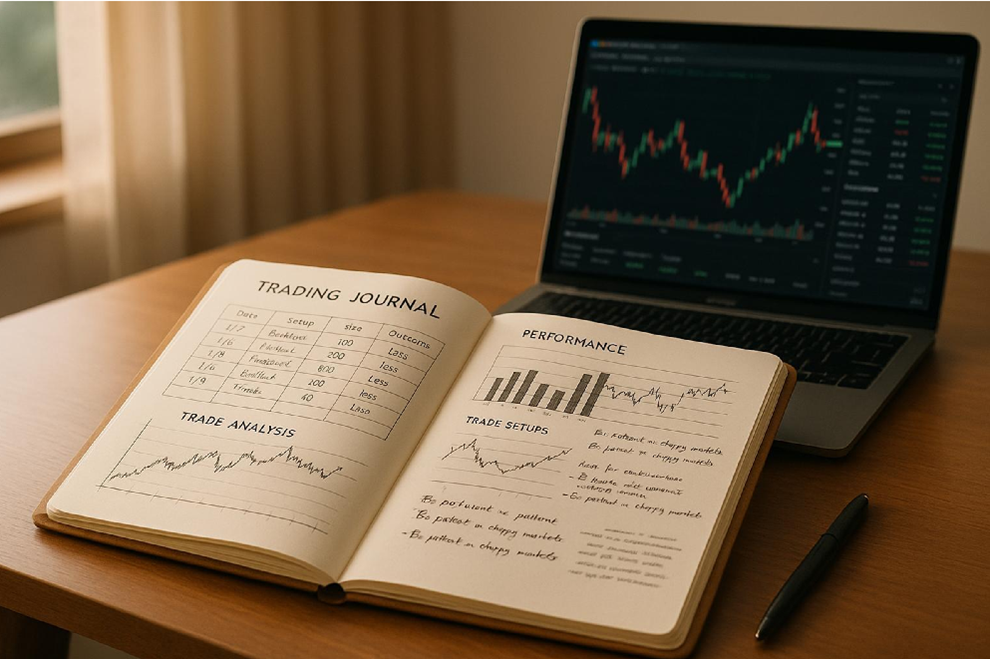
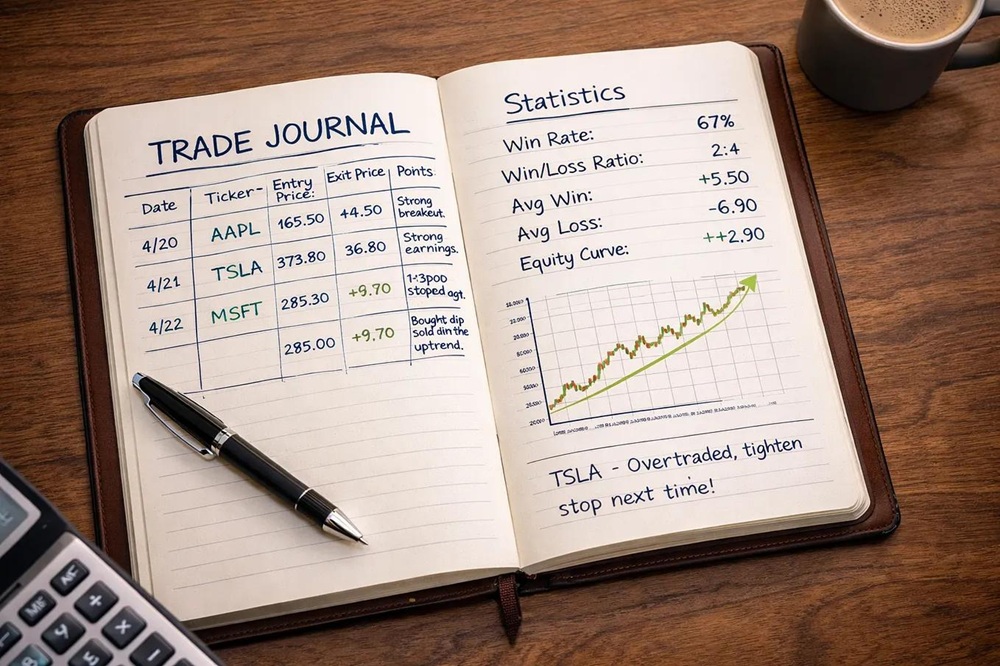
an Options Trading Journal
A trading journal can be one of the most useful tools in a trader's routine.
Consider recording the underlying security, strategy, strike prices, expiration date, entry price, implied volatility, market conditions, reason for entering, planned exit, actual result and observations after closing the position.
Screenshots of the original trading setup or chart can also be valuable.
After dozens or hundreds of trades, patterns may become visible. Perhaps certain trading strategies have historically worked better for your approach than others. Perhaps you're entering too early, holding losing trades too long or taking profits too quickly.
Without records, these impressions are easily distorted by memory.
Avoid
the Trap of Overtrading
One misconception about the trading lifestyle is that traders must constantly be trading.
They don't.
Sometimes the most disciplined decision is doing nothing.
When markets don't match the conditions required by a trading plan, forcing a position simply to feel productive can introduce unnecessary risk.
A trader can still be productive without placing a trade. Researching strategies, reviewing previous positions, studying price action, improving a watchlist or learning more about volatility can all contribute to long-term development.
Activity and productivity are not the same thing.
The
Psychological Side of the Trading Lifestyle
Trading inevitably involves uncertainty.
Even a carefully researched position can lose money. A profitable trade doesn't necessarily mean the decision was good, just as a losing trade doesn't automatically mean the decision was bad.
This distinction matters.
A trader who judges every decision solely by the result of the most recent trade can quickly become emotional. A series of winners may create overconfidence and excessive position sizing. Several losses can produce hesitation, revenge trading or abandonment of a sound process.
A healthier approach is to evaluate whether each decision followed the trading plan.
Over a sufficiently meaningful sample of trades, disciplined recordkeeping makes it easier to evaluate the process rather than obsessing over individual outcomes.
Trading
Freedom Doesn't Mean Trading All Day
One of the most appealing aspects of the trading lifestyle is potentially having greater control over your schedule.
Ironically, achieving that freedom may require learning when not to watch the market.
Depending on the strategy, options traders may not need to sit in front of screens throughout every market session. Longer-duration spreads, covered calls and other position-based approaches can involve a very different routine from short-term trading.
The lifestyle should therefore be designed around the strategy rather than designing a lifestyle first and forcing a strategy into it.
Continue
Learning
Markets change, and options contain multiple interacting variables. Continuing education should therefore remain part of the routine.
The Options Industry Council provides educational material covering basic options concepts, Greeks, volatility and strategy construction, while the SEC's Investor.gov provides introductory material on options and their risks. (Options Education)
Before trading standardized options, investors should also read the Characteristics and Risks of Standardized Options, commonly known as the Options Disclosure Document (ODD).
Creating
Your Own Options Trading Lifestyle
Ultimately, the options trading lifestyle isn't about expensive computers, exotic locations or placing dozens of trades every week.
It's about creating a sustainable framework around trading.
That framework combines education, a practical trading setup, carefully selected trading strategies, risk management, technical or fundamental analysis, an understanding of price action, journaling and continual improvement.
The lifestyle can look different for everyone. Some traders prefer active market participation; others favor strategies that require less frequent management. Some concentrate on directional trades, while others explore income, volatility or hedging strategies.
What matters is developing an approach that fits your objectives, available time, capital and tolerance for risk.
The attractive part of options is choice. There are numerous ways to construct a position and numerous ways to organize a trading routine. But sustainable freedom comes from structure rather than from abandoning it.
Build the knowledge first. Develop your trading plan. Define your risk. Keep accurate records. Improve the process over time.
That is the foundation of the options trading lifestyle.
Educational content only. Options involve risk and are not suitable for every investor. This article does not constitute investment advice or a recommendation to use any particular trading strategy.

Your second block of text...
Add a Comment
We and other readers of this information site value your input.
You can also (optionally) include any graphics such as charts, if you wish.
Popular Articles


-
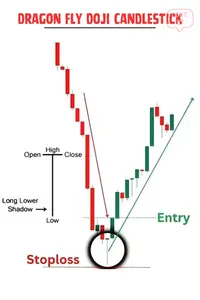
Dragonfly Doji Candlestick Pattern: Meaning and Trading Strategies
 The Dragonfly Doji Candlestick Pattern is one of the most distinctive candlestick formations used in technical analysis.
 -
Near Riskless Trading Strategies
Near Riskless Trading strategies using options, allows you to use advanced arbitrage techniques for highly profitable, almost risk free results. -
Wealth Building Options Trading
 Wealth building options trading - how to profit from share investments even if you buy at the top of the market.
 -
The Three Legged Box Spread - A Great Lifestyle Trade
 Whether you only have a few thousand or a large sum to invest, the Three Legged Box Spread is one of the best option trading strategies available today.
 -
XTR ProTrader Signals
-
The Double Calendar Spread
 The double calendar spread is a very safe option strategy which profits consistently - provided you know exactly what to do when price action threatens it.
 -
ETF Options - Why You Should Trade Them
 ETF Options when combined with the right options strategy, can be one of the best and safest ways to profit consistently from the financial markets.
 -
The Covered Put Option Strategy
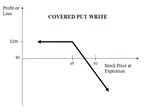
 The covered put option strategy explained, with payoff diagram and examples. These are most suited to a bearish to neutral market.
 -
How to Use the VIX
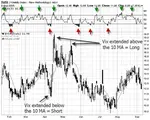
 Knowing how to use the VIX should be essential for all traders whose portfolio of positions may be affected by general market sentiment.
 -
Using Options to Buy Stocks at Discount Prices
 Did you know that you could be using options to buy stocks so much cheaper than if you just went to your broker and simply bought them at market price?
 -
How Option Price Movements Effect Gains and Losses
Knowing about and understanding how options work is a potent arrow in a trader’s quiver. One of the things that people new to options must understand -
When can you trade Forex Options?
The forex market is the largest financial market in the world which works 24 hours, 5 days per week, if you consider the whole world as a single entity. -
Iron Condor Option Strategy
 In this iron condor option strategy we show you the best way to leg into positions safely and also to adjust your positions when they are threatened.
 -
What is a Straddle Option? A Great Delta Neutral Strategy!
 So what is a straddle option and why is it such a great options trading strategy? You don't have to pick market direction and can still profit very well.
 -
The Long Iron Butterfly - Credit Spreads on Steroids
The long iron butterfly is a range trading strategy and a variation of the Iron Condor. Both these strategies use two credit spreads using both calls and puts -
The Distinct Advantage Credit Spreads Are Known For
So what is the advantage credit spreads give us? This example will demonstrate how we can turn a losing trade into a profitable one. -
Box spreads Illustrated and Explained
Box spreads are an option trading strategy that involves purchasing a bull-call spread with a corresponding bear-put spread. The two vertical spreads have the same expiration dates and strike prices. -
Exotic Options Explained With Examples
Exotic options are typically more complex than regular options. They are most popularly traded on currency pairs but can also be traded on stock options, stock indexes, warrants and commodity options -
Hoadley Options Tools Review
 Hoadley Options Trading and Investment Tools is an Excel based tool that makes options risk analysis easy.
 -
Free Option Trading Software
So we've done some research for you and below, you'll find a summary of some of the best free option trading software available.



Amazon Affiliate
Copyright © 2002- Options Trading Mastery. ALL RIGHTS RESERVED.
Other Recommended sites:
NaturalRelieved | European Travel Escape | Relationships Guide
