Search Options Trading Mastery:
Oil Futures Options
Follow the Price of Oil and Profit with Oil Futures Options
The existence of unique financial instruments known as oil futures options allow many investors to turn this precious resource into an investment that brings a return without all of the risk normally found in the futures market. The distinction between futures and options are at the heart of this opportunity.
Oil futures options differ from regular oil futures primarily because of the clause in the options contract which gives the holder the right but not the obligation, to buy a certain quantity of oil at a set time in the future. This provides the buyer of an option some insurance against unforeseen activity in the market which sends prices suddenly up or down. In any case, the buyer can only lose what he or she initially invested - the option premium paid. With a future, the losses are potentially much greater. Also, options holders never have to worry about a margin call. However, these advantages are no longer available once the market closes on the expiration date of the contract.
Such options are divided into two categories. These categories are known as call options and put options. Bullish traders, who think that oil prices are going to rise, will buy call options. These allow the trader to control the rights to a commodity such as oil at a fixed price which they hope will be lower than the actual value of the commodity at some point in the duration of the contract. Put options allow the trader to sell the contracts at a fixed price, even if the market value of the oil has dropped below that price.
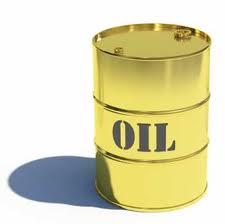
Oil Futures Options Vs. Regular Oil Futures
These options are not without risk, or they would not be so lucrative. They offer the ability to limit loss and give the buyer some additional leverage. However, they can also expire worthless and lose the buyer's entire investment.
In addition to this leverage and limitation against losses, oil futures options also offer a lot of flexibility in your investment. They are wisely used in combination with regular futures to minimize loss and maximize gain. They also provide an excellent sense of insurance during times of high volatility.
However, these options also suffer from time decay. The value of an out-of-the-money options contract lessens as time passes. Since you can choose to switch from buying options to selling options, this risk is somewhat lessened.
Oil futures options are traded on the New York Mercantile Exchange (NYMEX) and one option contract covers 1,000 barrels of oil and their prices are quoted in dollars and cents per barrel. Since one barrel of oil is 42 gallons, one option contract covers 42,000 gallons of oil.
Oil futures and their options are quoted on the exchange as:
1. NYMEX Light Sweet Crude
2. NYMEX Brent Crude
What Affects the Price of Oil
Oil is a commodity in huge demand, not only for machinery but also heating. Consequently, the price of heating oil generally rises during the northern hemisphere winter. But the price of crude oil is also affected by a number of geopolitical factors such as war in the Middle East, recessions and natural disasters such as hurricanes, earthquakes and the like. When the price of oil becomes volatile due to an uncertain political climate, option strategies such as straddles and strangles can really bring home the bacon. Keeping abreast of the factors that contribute toward fluctuting oil prices really pays.
Once you understand the relationship between oil futures and their associated options contracts, you can employ option trading strategies that either focus exclusively on only options contracts ... OR on a combination of holding futures contracts and options for the same commodity - in which you can take either a "buy" or "sell" position.
**************** ****************
Return to Commodity Options Trading Contents Page
Go to Option Trading Homepage

Popular Articles


-
Near Riskless Trading Strategies
Near Riskless Trading strategies using options, allows you to use advanced arbitrage techniques for highly profitable, almost risk free results. -
Wealth Building Options Trading
 Wealth building options trading - how to profit from share investments even if you buy at the top of the market.
 -
The Three Legged Box Spread - A Great Lifestyle Trade
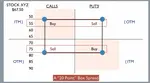 Whether you only have a few thousand or a large sum to invest, the Three Legged Box Spread is one of the best option trading strategies available for retail investors today.
 -
XTR ProTrader Signals
-
The Double Calendar Spread
 The double calendar spread is a very safe option strategy which profits consistently - provided you know exactly what to do when price action threatens it.
 -
ETF Options - Why You Should Trade Them
 ETF Options when combined with the right options strategy, can be one of the best and safest ways to profit consistently from the financial markets.
 -
The Covered Put Option Strategy
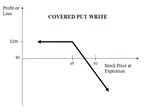 The covered put option strategy explained, with payoff diagram and examples. These are most suited to a bearish to neutral market.
 -
How to Use the VIX
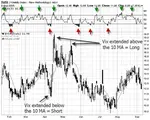 Knowing how to use the VIX should be essential for all traders whose portfolio of positions may be affected by general market sentiment.
 -
Using Options to Buy Stocks at Discount Prices
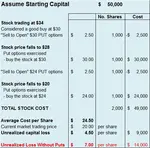 Did you know that you could be using options to buy stocks so much cheaper than if you just went to your broker and simply bought them at market price?
 -
How Option Price Movements Effect Gains and Losses
Knowing about and understanding how options work is a potent arrow in a trader’s quiver. One of the things that people new to options must understand -
When can you trade Forex Options?
The forex market is the largest financial market in the world which works 24 hours, 5 days per week, if you consider the whole world as a single entity. -
Iron Condor Option Strategy
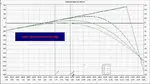 In this iron condor option strategy we show you the best way to leg into positions safely and also to adjust your positions when they are threatened.
 -
What is a Straddle Option? A Great Delta Neutral Strategy!
 So what is a straddle option and why is it such a great options trading strategy? You don't have to pick market direction and can still profit very well.
 -
The Long Iron Butterfly - Credit Spreads on Steroids
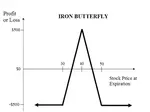 The long iron butterfly is a range trading strategy and a variation of the Iron Condor. Both these strategies use two credit spreads using both calls and puts
 -
The Distinct Advantage Credit Spreads Are Known For
 So what is the advantage credit spreads give us? This example will demonstrate how we can turn a losing trade into a profitable one.
 -
Box spreads Illustrated and Explained
Box spreads are an option trading strategy that involves purchasing a bull-call spread with a corresponding bear-put spread. The two vertical spreads have the same expiration dates and strike prices. -
Exotic Options Explained With Examples
Exotic options are typically more complex than regular options. They are most popularly traded on currency pairs but can also be traded on stock options, stock indexes, warrants and commodity options -
Hoadley Options Tools Review
 Hoadley Options Trading and Investment Tools is an Excel based tool that makes options risk analysis easy.
 -
Free Option Trading Software
So we've done some research for you and below, you'll find a summary of some of the best free option trading software available. -
Invest in Soxange and Multiply Earnings through Copying the Top Traders in this Social Network
Within the context of the online trading world, SoXange is one of the few trading platforms that draw all kinds of traders in droves to that online trading
Amazon Affiliate
Copyright © 2002- Options Trading Mastery. ALL RIGHTS RESERVED.
Other Recommended sites:
NaturalRelieved | European Travel Escape | Relationships Guide

New! Comments
Have your say about what you just read! Leave me a comment in the box below.